
The quoting convention of the swaption volatility is annualized normal vol under annuity measure. Here, normal is contrary to log-normal. It is also called Black’s (vs Balck-Scholes) or Bachelier’s model. We will use formulas to explain what it means.
Note 1: Black’s model is used for quoting only in modern financial modeling. It doesn’t mean the dynamics of interest rates are modeled this way. A commonly used model for swaption is SABR (stochastic alpha beta rho).
Note 2: The formula below ignores nuances of the effective date, settlement date, and day count convention.
Notations:
 : maturity of swaption
 : tenor (maturity) of the underlying swap
 : risk neutral measure
 : annuity or annuity measure where annuity matches the floating leg pay frequency of the underlying swap
 : strike
 : discount factor from
  to
to 
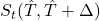 : par swap rate for a swap contract from to
  seen at
  . We define a short-hand
  when there is no confusion.
 : conditional expectation on
  for filtration
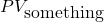 : present value of something.
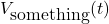 : value of something at time .
Below, we set up the formula for PV of a payer swaption assuming the notional is $1. For a more general notional, just scale the formula up by the notional. In a payer swaption, the purchaser has the right but not the obligation to enter into a swap contract where they become the fixed-rate payer and the floating-rate receiver.
![\[\small \begin{aligned} PV_{\mbox{payer}} =& \mathbb{E}_0^{\mathbb{Q}}\left[\left(V_{\mbox{float}}(\hat{T})-V_{\mbox{fixed}}(\hat{T})\right)^+P(0,\hat{T})\right] \\ =& \mathbb{E}_0^{\mathbb{Q}}\left[ \left(S_{\hat{T}}(\hat{T},\hat{T}+\Delta)A(\hat{T})-KA(\hat{T})\right)^+P(0,\hat{T})\right] \\ = & A(0) \mathbb{E}^{A}_{0} \left[\left(S_{\hat{T}}(\hat{T},\hat{T}+\Delta) - K\right)^+\right] \end{aligned}\]](https://sisitang0.com/wp-content/ql-cache/quicklatex.com-46b8968ad668b901d385cf47984bfdcb_l3.png "Rendered by QuickLaTeX.com")
The last line of the above formula is a change of numeraire from risk-neutral measure to annuity measure.
Since swaption vol is quoted as Bachelier’s vol in annuity measure, the dynamic of interest rate under this measure is the following:
![\[\small \textrm{d} S_t = \sigma \textrm{d} W_t,\]](https://sisitang0.com/wp-content/ql-cache/quicklatex.com-2dfbc9dc5a97161a82d4aa617124459e_l3.png "Rendered by QuickLaTeX.com")
where  is a standard Brownian motion under annuity measure and
  is constant.
Hence (by integrating both sides from to ), denoting by  a normal distribution, we have
![\[\small S_{\hat{T}} \sim \mathcal{N}(S_0, \sigma\sqrt{\hat{T}}).\]](https://sisitang0.com/wp-content/ql-cache/quicklatex.com-6ae89b3e67ab61f13258710b5995cea5_l3.png "Rendered by QuickLaTeX.com")
After plugging in the Gaussian density, the annuity measure expectation becomes
![\[\small \begin{aligned} & \mathbb{E}^{A}_{0} \left[\left(S_{\hat{T}} - K\right)^+\right] \\ = & \int_{K}^{+\infty} (x-K) \frac{1}{\sigma \sqrt{2\pi\hat{T}}} e^{-\frac{(x-S_0)^2}{2\sigma^2\hat{T}}} \textrm{d} x \\ = & \sigma \sqrt{\hat{T}} \cdot \varphi (d_1) + (S_0 - K) \cdot \Phi(d_1) \end{aligned} ,\]](https://sisitang0.com/wp-content/ql-cache/quicklatex.com-eb1476fe039617fd4d4d8a91e72ba15f_l3.png "Rendered by QuickLaTeX.com")
where
 is the probability density function of the standard Gaussian distribution
 is the cumulative density function of the standard Gaussian distribution

Finally,
![\[\small PV_{\mbox{payer}} = A(0) \left[\sigma \sqrt{\hat{T}} \cdot \varphi (d_1) + (S_0 - K) \cdot \Phi(d_1) \right]\]](https://sisitang0.com/wp-content/ql-cache/quicklatex.com-4f7a6fbf03ce4e29de01b29e13301587_l3.png "Rendered by QuickLaTeX.com")
The Greeks are as follows:
Delta = 
Vega = 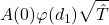
Gamma = 
The vega-gamma relationship is:
![\[\small \mbox{Vega} =\hat{T}} \sigma \mbox{Gamma}\]](https://sisitang0.com/wp-content/ql-cache/quicklatex.com-9ac2e214d7f81af6728151e809b678ce_l3.png "Rendered by QuickLaTeX.com")
The value of annuity  depends on discounting curve, but one can approximate it by tenor () in years, i.e., no discounting. The swaption Bachelier’s/normal/Black’s vol is quoted in the unit of bps. For example, 107 means 107bps, i.e., 0.0107. Below we provide two examples of PV: one ATM and one ITM.

For a receiver swaption, PV and greeks can be calculated in the same manner.